BLOG ARTICLE
Faceless Motivational Channels: How to Inspire 2026

Faceless motivational channels focus on the message, not the messenger. Viewers searching for inspiration, success habits, or “motivation to start the day” care about the words and the feeling they create, not who’s speaking. Lifestyle and personal development content often earns $5–$10 CPM and attracts engaged audiences that share and rewatch. This guide covers why the motivational niche works faceless, content ideas and formats, real channel examples, how to create motivational videos without showing your face, monetization, and growth so you can start a faceless motivational channel in 2026.
TL;DR
- Motivational content fits faceless formats. The focus is on the message and delivery, not the host. Lifestyle and personal development typically earn $5–$10 CPM; pairing powerful quotes with compelling visuals and music can drive strong engagement without you on camera.
- Content that performs: Motivational speeches, success stories, quotes over cinematic B-roll, morning routines, habits of successful people, and list-style videos (“5 habits,” “10 quotes”). Evergreen topics keep attracting search and browse traffic.
- Production without a face: Voiceover (your own or AI) over stock footage, text-on-screen quotes, and music that builds emotion. Tools like Canva, Pexels, and AI voice generators keep production scalable.
- Monetization beyond ads: Sponsorships from self-improvement and productivity brands, affiliate links to books and courses, and digital products (courses, e-books). Channels like Charisma on Command show that courses can significantly boost income beyond ads.
- No face required. Channels like Business Motiversity and Ben Lionel Scott deliver impactful messages with strong visuals and music, building large audiences without a host on camera.
Why the Motivational Niche Works Faceless
Motivational content suits faceless formats because the message and delivery matter more than the person. When someone searches for “motivation for success” or “best motivational speech,” they want to feel inspired; they don’t need to see the speaker. Pairing powerful quotes or scripts with cinematic B-roll, text overlays, and music that builds emotion can create the same impact as a talking-head video—often with lower production cost and easier scaling. Lifestyle and personal development typically earn $5–$10 CPM; tier-1 audiences (US, UK, Canada, Australia) command the best rates. If you’re choosing or refining your niche, motivational content is a strong option for engagement and for sponsorships and affiliate deals (books, courses, productivity tools).
Sub-niches within motivational
Not all motivational content is the same. Business and success (habits of millionaires, morning routines, productivity) often overlap with high-intent audiences and attract sponsors and affiliate programs. Quotes and daily inspiration (quotes to start your day, motivational compilations) are highly shareable and evergreen. Personal development and mindset (confidence, resilience, goal-setting) suit both ads and digital products (courses, e-books). Success stories and case studies (how X achieved Y) drive engagement and can be produced with stock footage and AI voiceover. Picking a sub-niche you can sustain (e.g. “productivity and habits” or “confidence and mindset”) helps you rank for specific searches and build a recognizable style.
Content Ideas and Formats That Work
Motivational audiences search for inspiration, habits, and “how to stay motivated.” Evergreen topics (morning routines, habits of successful people, motivational quotes) stay relevant year-round and keep attracting views long after upload. That fits faceless production: you script, pair with stock footage or text-on-screen, add AI voiceover or your own voice, and publish without ever showing your face.
Strong content angles for faceless motivational channels:
- Quotes and compilations: “10 motivational quotes to start your day,” “Best quotes about success,” or “Quotes that will change your mindset.” Pair each quote with cinematic B-roll or simple text overlays and music. Highly shareable and easy to batch.
- Habits and routines: “5 habits of millionaires,” “Morning routine for success,” or “What successful people do before breakfast.” List-style and how-to formats attract search traffic and suit AI voiceover over stock footage.
- Success stories and case studies: “How X went from broke to millionaire,” “The story behind [famous person]’s success.” Narrative storytelling with B-roll and voiceover; no host needed.
- Motivational speeches and monologues: Scripts that feel like speeches (e.g. “You are capable of more,” “Why you should never give up”). Pair with powerful visuals and music; the tone and pacing carry the video.
- Book summaries and takeaways: “Key lessons from [book],” “5 takeaways from Atomic Habits.” Educational and motivational; fits affiliate links to books and courses.
Videos of 8 minutes or longer allow mid-roll ads and tend to earn more per view. Use chapters (e.g. one per habit or quote) so viewers can jump to what they need and so the algorithm can understand the video.
Successful Faceless Motivational Channels: Real Examples
These channels show how motivational content can work without a face on camera. They use voiceover, strong visuals, and music to deliver impactful messages.
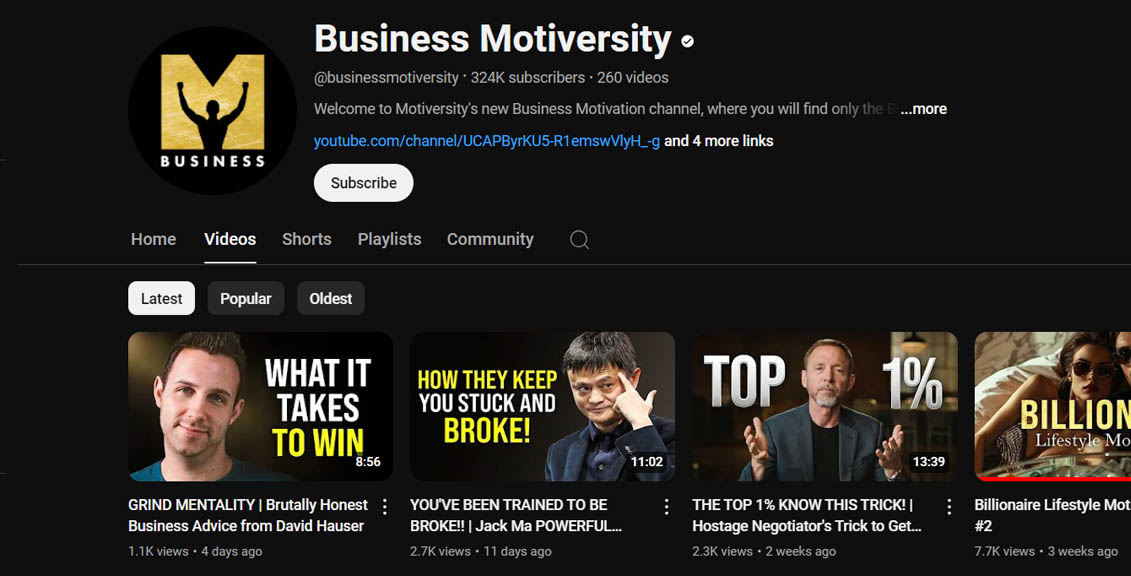
Business Motiversity provides motivational content geared toward business and personal growth. The format is fully faceless: powerful narration over visuals and music. The focus is on the message and the feeling it creates, not the host. Channels in this style often monetize through ads, sponsorships from self-improvement brands, and affiliate links to books and courses.
Ben Lionel Scott delivers motivational videos with impactful messages underpinned by strong visuals and music. The format is voiceover over cinematic or atmospheric footage; no face on camera. The combination of script, tone, and music drives engagement and rewatches.
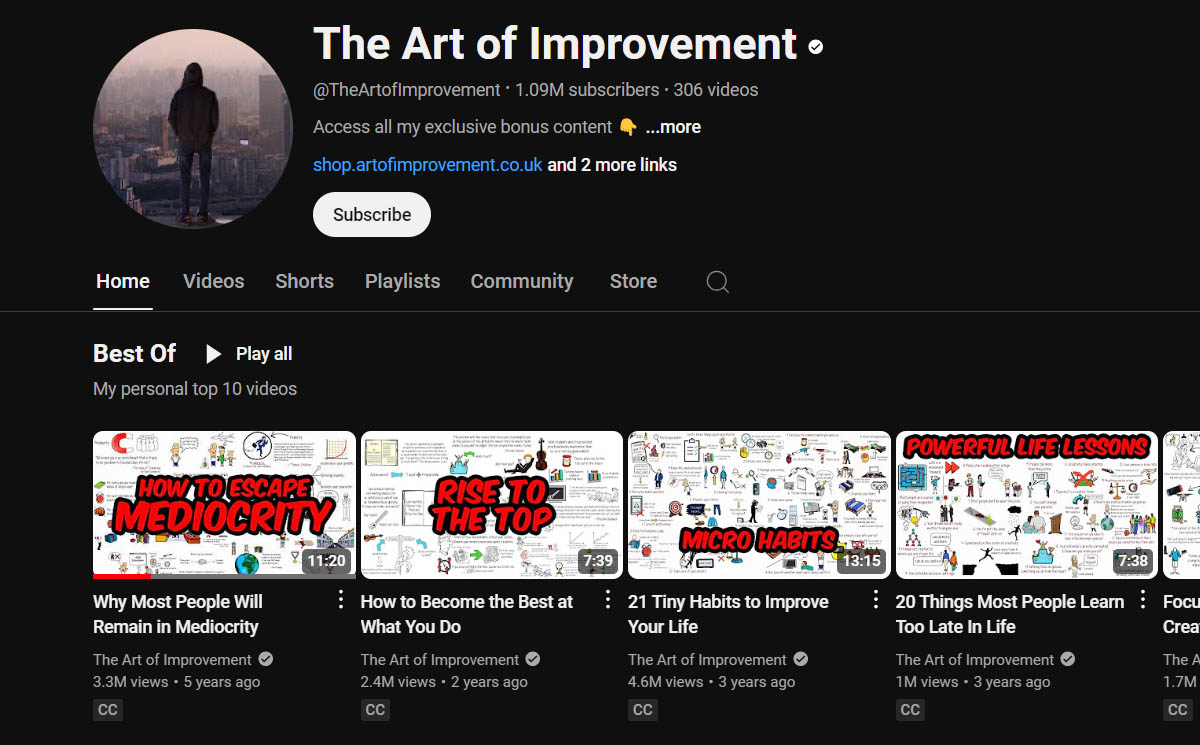
The Art of Improvement uses animated videos and AI voiceover to discuss self-improvement, productivity, and motivation. The consistent voice and visual style build familiarity; the channel shows that motivational content can scale with AI-generated narration and simple animations.
Charisma on Command focuses on self-improvement and personal growth (charisma, confidence, social skills) and has grown to millions of subscribers. The channel combines ad revenue with significant income from digital products (e.g. courses), showing how monetization beyond ads can scale for motivational and self-improvement content.
What these channels share: a clear niche, consistent format (script + visuals + voice/music), and focus on message and emotion rather than personality. You can adopt a similar approach with stock footage and music and AI voiceover or your own voice.
How to Create Motivational Videos Without Showing Your Face
You don’t need a camera. Motivational faceless videos are built from a strong script, visuals (stock footage or text-on-screen), and voiceover plus music.
Script first. The message carries the video. Outline the narrative (e.g. problem → insight → call to action), draft the script, and refine the tone (uplifting, urgent, calm). Short, punchy lines often work better than long paragraphs. For quote compilations, select quotes that fit a theme and write brief intros or transitions.
Stock footage and B-roll. Pair the script with cinematic or atmospheric footage: nature, cityscapes, people achieving goals, sunrises, or abstract motion. Pexels, Pixabay, or paid libraries (e.g. Storyblocks) offer royalty-free clips. Match the mood of the scene to the message (e.g. sunrise for “new beginning,” mountain for “overcome obstacles”). Mix footage types to keep the video dynamic.
Text on screen. For quote videos, overlay the quote as text on top of B-roll or a simple background. Use a readable font and contrast so the text is clear on mobile. Canva or your editor can handle text overlays; keep the style consistent across videos.
Voiceover. Your own voice works if the tone fits (calm, confident, or energetic). AI voice generators suit motivational content when you choose a voice that matches the mood (e.g. warm and uplifting). Keep pacing consistent; avoid a flat or robotic delivery. The Art of Improvement and similar channels use AI voice successfully for self-improvement content.
Music. Music that builds emotion is central to motivational content. Choose tracks that complement the tone (inspiring, reflective, energetic) and avoid copyrighted music unless you have a license. YouTube’s Audio Library and royalty-free libraries (Epidemic Sound, Artlist) offer options for monetizable videos.
If you’re new to faceless video production, start with one format (e.g. quotes over B-roll + music, or a short “5 habits” script + AI voiceover + stock footage) and refine it before adding more. Emotional impact and consistency matter more than production polish.
Monetizing Your Faceless Motivational Channel
Motivational channels can earn from several streams. Ads are the baseline: once you’re in the YouTube Partner Program, long-form motivational content typically earns $3–$8 RPM or more depending on audience location. Many successful motivational creators also rely on sponsorships, affiliate marketing, and digital products.
Sponsorships: Self-improvement, productivity, and wellness brands look for channels with engaged audiences. Sponsorship CPMs for lifestyle and personal development often sit in the $10–$25 range for integrated segments. Pitch with a short media kit (audience, views, engagement) and keep sponsorships relevant to your content (e.g. a productivity channel and a habit-tracking app).
Affiliate marketing: Books (Amazon Associates), course platforms (e.g. Teachable), and productivity or meditation apps often have affiliate programs. When you recommend a book or course that fits your video (e.g. “Key lessons from Atomic Habits”), put your link in the first lines of the description and in a pinned comment. Disclose affiliate links clearly; the FTC expects that viewers see the relationship before they click.
Digital products: If you build authority, you can sell courses, e-books, or templates (e.g. morning routine planner, goal-setting guide). Charisma on Command and similar channels show that courses can generate significant revenue beyond ads. These work best when they extend what you already teach for free on the channel.
Diversifying across ads, affiliate, and sponsorships smooths out swings in any one source and is a common approach for faceless channel monetization.
Growing Your Motivational Channel
Growth comes from discoverability and emotional resonance. Keyword research helps you find topics people search for (e.g. “morning motivation,” “habits of successful people,” “best motivational quotes”) so you can create videos that rank. Use tools like Ahrefs’ YouTube keyword tool or similar to see volume and competition; then target clear, specific titles and descriptions.
Hooks and structure. The first 10–30 seconds should deliver on the thumbnail and title. Open with a strong quote, a question, or a promise (e.g. “These 5 habits changed how I approach every day”). Use chapters so viewers can jump to what they need (e.g. one per habit or quote) and so the algorithm can understand the video.
Consistency. Posting on a schedule (e.g. one or two long-form videos per week, or daily Shorts) helps the algorithm and builds habit with your audience. Batch scripting and production so you can keep publishing; AI voiceover and stock footage make batching easier.
Shareability. Motivational content is often shared and saved. Encourage saves and shares with clear CTAs (e.g. “Save this for when you need a push,” “Send this to someone who needs it”). Thumbnails with a compelling quote or face (from stock) can improve click-through.
Shorts and funnels. Shorts earn much less per view than long-form in motivational, but they can introduce your channel to new viewers. Use Shorts to tease a quote or a “one habit” takeaway and point viewers to a full video on your channel.
Frequently Asked Questions
Is the motivational niche good for faceless YouTube channels?
Yes. Motivational content is about the message and the feeling, not the host. Pairing powerful quotes or scripts with cinematic B-roll, text overlays, and music can create strong impact without you on camera. Channels like Business Motiversity, Ben Lionel Scott, and The Art of Improvement show that faceless motivational content can build large audiences and strong sponsorship and affiliate revenue.
How much do faceless motivational channels make?
Earnings depend on views, sub-niche, and audience location. Lifestyle and personal development typically earn $5–$10 CPM, so RPM (what you take home after YouTube’s cut) often sits in the $3–$8 range. A channel with 100K views per month on long-form motivational content might earn roughly $300–$800 from ads alone, with more possible from sponsorships, affiliate, and digital products. Channels like Charisma on Command show that courses and products can add significant revenue beyond ads.
Do I need to be a motivational speaker to run a motivational channel?
No. You need a clear message, a script that resonates, and visuals and music that support the tone. Many successful faceless motivational channels use AI voiceover or a calm, consistent narrator; the content and production do the work. Research topics (habits, quotes, success stories) and present them in a structured, emotional way.
What format works best for faceless motivational videos?
Quotes over cinematic B-roll with music, list-style videos (“5 habits,” “10 quotes”) with voiceover and stock footage, and short motivational speeches with text and visuals all work. Choose one format that matches your sub-niche (e.g. quotes for daily inspiration, habits for productivity) and refine it; AI voiceover and stock footage support all of them.
Which motivational sub-niche has the highest CPM?
Business and success (habits, productivity, morning routines) often overlap with higher-intent audiences and attract sponsors and affiliate programs (courses, books). Pure quote compilations can earn well with tier-1 audiences. Target US, UK, Canada, and Australia for the best rates; engagement and shareability also matter for algorithm reach.
Summary
Faceless motivational channels can build large, engaged audiences by focusing on the message, strong visuals, and music. Choose a sub-niche you can sustain (e.g. productivity and habits, or quotes and daily inspiration), use formats like quotes over B-roll or list-style videos with AI voiceover and stock footage, and model what works for channels like Business Motiversity, Ben Lionel Scott, The Art of Improvement, and Charisma on Command. Monetize through ads, affiliate marketing, sponsorships, and digital products. With consistent, emotionally resonant content and the right growth and production approach, a faceless motivational channel can become a strong, long-term asset.