BLOG ARTICLE
SEO for Faceless Channels: Keywords to Ranking

Faceless YouTube channels don’t have a face to build recognition. Viewers find you through search and recommendations, so SEO from keyword research to on-page optimization and engagement is what fills the gap. Get it right and your videos show up when people search for topics in your niche; get it wrong and even strong content can sit unseen. This guide walks you through keyword research, how to optimize titles and descriptions, what actually influences ranking, and how to apply it so your faceless channel ranks and grows in 2026.
TL;DR
- SEO is critical for faceless channels. Without a face, discoverability depends on search and suggested videos. Keyword research gets people to click; strong titles, thumbnails, and retention keep them watching and help you rank.
- Keyword research: Use Ahrefs YouTube keyword tool, RyRob’s free keyword finder, and Google Trends to find high-volume, low-competition terms. Use YouTube search autocomplete and competitor “Popular” tabs to spot what people search for and what already ranks.
- Titles and descriptions: Put the main keyword near the start of the title. Write descriptions of 150+ words with natural keywords and value (timestamps, links, takeaways). A study of 1.6M videos found most top-ranking videos include useful description content; quality beats keyword stuffing.
- Ranking factors: Watch time and engagement (likes, comments, shares) matter more than metadata. Backlinko’s analysis of 1.3M videos shows comments, watch time, and subscriptions driven correlate strongly with rankings. Optimize for retention and CTR, not just tags.
- By niche: Finance (“how to invest with little money”), tech (“best free screen recorder”), educational (“why did the Roman Empire fall”), motivational (“habits of successful people”). Long-tail phrases often have lower competition and fit faceless production well.
Why SEO Matters More for Faceless Channels
When you’re not on camera, you don’t get the same “I know that person” boost from returning viewers. Discovery depends on search results and suggested videos. That makes keyword research and on-video optimization (title, description, thumbnail, retention) central to growth. Channels that start with a clear niche and consistent script and production still need to be found; SEO is how you connect your content to the queries people already type into YouTube. Treat YouTube as a search engine, find terms your audience uses, and align your metadata and content with those terms so the algorithm can match your videos to the right viewers.
Keyword Research: Finding What People Search For
Keyword research is the base of YouTube SEO for faceless channels. You want terms with enough search volume to be worth targeting and competition you can realistically compete with, especially when you’re new or small.
Use YouTube Search and Autocomplete
Type your niche or topic into YouTube’s search bar and use the autocomplete suggestions. Those phrases are real searches. Note the ones that match your content and that you can cover well. For example, for “faceless channel” you might see “faceless channel ideas,” “faceless channel monetization,” or “how to start a faceless youtube channel.” Use these to build a list of candidate keywords and to spot question-based or how-to queries that fit educational or motivational formats.
Tools: Ahrefs, RyRob, Google Trends
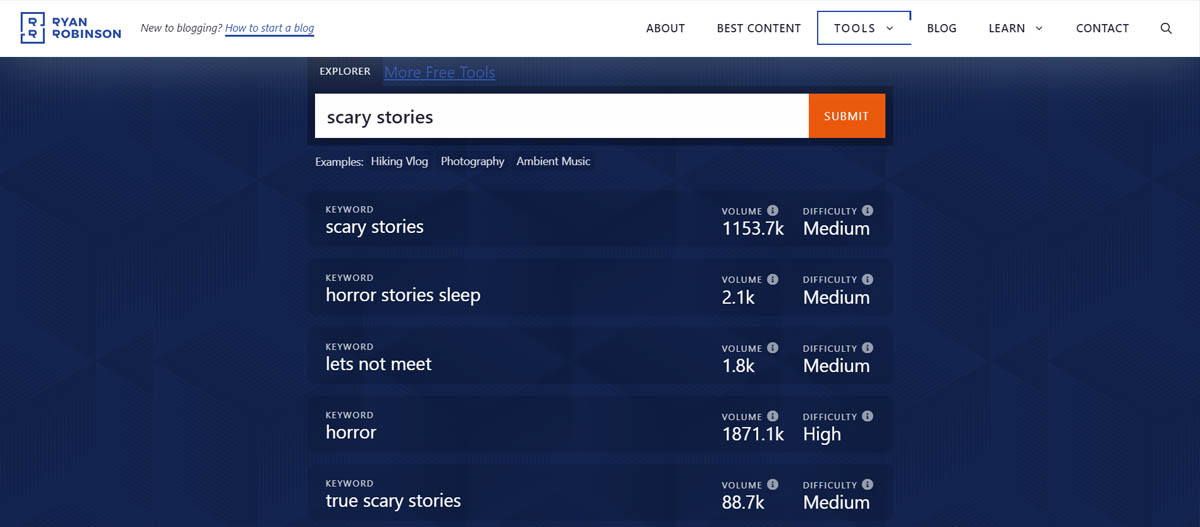
Ahrefs’ YouTube keyword tool shows search volume and competition so you can prioritize high-volume, lower-competition keywords. RyRob’s free YouTube keyword tool gives you a quick view of what’s driving traffic to channels and videos you enter, so you can see what’s working for others. Google Trends helps you check whether interest in a topic is stable, rising, or seasonal. Use it to avoid sinking time into fading trends or to double down on rising ones. Combining autocomplete with these tools lets you build a keyword list that’s both demand-driven and realistic for a faceless channel to rank for.
Competitor and “Popular” Tab Research
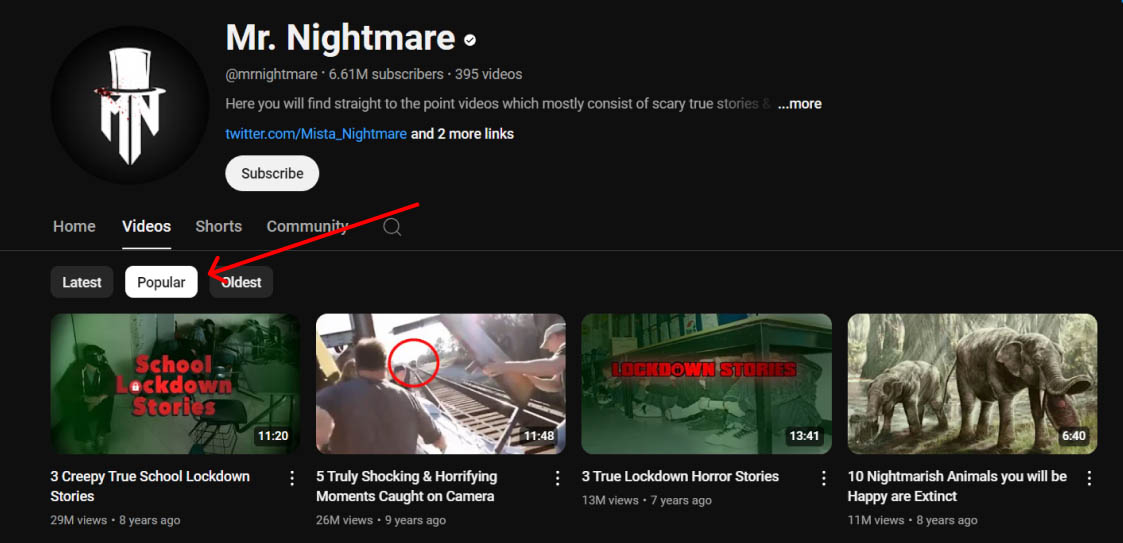
Look at successful channels in your niche. Open their channel page and check the “Popular” tab to see which videos get the most views. Those titles and topics are a proxy for what’s ranking and what audiences click on. Note the phrasing they use in titles (questions, numbers, “how to,” “best”) and the themes that repeat. You’re not copying; you’re learning what kind of keywords and angles already work so you can create something distinct that still matches search intent. This is especially useful for tech and finance niches where specific phrases (“best laptop under $500,” “how to start investing with $100”) drive a lot of search traffic.
Long-Tail Keywords and Micro-Niches
Long-tail keywords (longer, more specific phrases) usually have lower volume but also lower competition. For faceless channels that can batch scripts and videos, targeting a set of long-tail terms often works better than fighting for one huge keyword. For example, instead of “investing” you might target “how to start investing with little money” or “investing for beginners with $100.” Instead of “productivity,” “morning routine for success” or “5 habits of millionaires.” These phrases match what people actually search when they’re ready to watch a single, focused video. Pick a micro-niche you can sustain and build a list of long-tail keywords around it; that’s how many faceless channels that monetize keep a steady flow of search traffic.
Titles, Descriptions, and Thumbnails
Once you have target keywords, use them where they influence both discovery and click-through rate (CTR).
Put the Keyword Early in the Title
Backlinko’s study of 1.3M YouTube videos found that videos with the exact target keyword in the title have a slight edge in ranking for that term. Put your main keyword near the beginning of the title so viewers and the algorithm immediately see what the video is about. For example, “How to Start Investing With $100” instead of “You Won’t Believe This: How to Start Investing With $100.” You can still add a curiosity or benefit phrase, but lead with the search term when it fits naturally. Titles should be clear and match what you deliver in the first seconds; that supports both SEO and retention.
Descriptions: Keywords and Value
YouTube’s own guidance says well-written descriptions with relevant keywords can help videos show up in search. Write at least 150 words, use your target keyword and natural variations in the first sentence or two, and add value: a short summary, timestamps or chapters, key takeaways, or links where relevant. The same large-scale YouTube SEO study that looked at top-ranking videos found that many include useful description content (e.g. links, structure); quality and usefulness matter more than stuffing keywords. Descriptions also help your video appear as a suggested video next to others, so a clear, informative description supports both search and recommendations.
Thumbnails and CTR
YouTube tests your video with a small audience first. CTR (click-through rate) in that early window affects how much YouTube promotes it. Thumbnails and titles work together: the title says what the video is, the thumbnail sells the click. Use bold, readable text (short phrases), strong contrast, and a clear focal point. Thumbnails with a face (including an avatar or character) often perform better because they create a quick visual hook. A/B test thumbnails when you can; small changes can meaningfully move CTR and thus ranking potential. For faceless channels, the thumbnail is one of your main tools to compete with personality-driven creators.
What Actually Drives Ranking: Watch Time and Engagement
Keyword-rich titles and descriptions help YouTube understand and surface your video, but behavioral signals have a stronger link to where you rank.
Watch Time Is the Dominant Signal
YouTube has stated that watch time (total time viewers spend on your video) is a key ranking signal. Longer videos can accumulate more total watch time, and Backlinko’s analysis found that the average first-page result is around 14 minutes 50 seconds. That doesn’t mean every video must be long; it means that when you do long-form content, retention matters. Structure your script with a strong hook, clear sections, and retention spikes (questions, surprises, recaps) so people watch longer. For faceless videos, that’s usually about script and pacing rather than personality.
Comments, Likes, and Shares
The same Backlinko study found comments, likes, and shares correlate strongly with higher rankings. Videos that drive subscriptions also tend to rank better. So SEO isn’t only metadata: it’s also engagement. Encourage comments with questions or prompts (e.g. “Which of these do you already do?”), add a clear subscribe CTA, and create content people want to share. Faceless channels can do this with strong hooks, useful takeaways, and content that fits the niche so viewers feel they get real value.
Tags: Small but Still Useful
Tags show a weak correlation with rankings in large studies; YouTube can understand a lot from title, description, and the video itself. Still, using a small set of relevant tags (including your main keyword and close variations) is quick and may help a little. Don’t stuff dozens of unrelated tags; keep them descriptive and aligned with the topic.
Optimization Beyond Metadata: Retention and Structure
Ranking improves when viewers watch longer and engage. A few on-video and on-page choices support that.
Chapters and timestamps. Adding chapters in the description (or via timestamps) helps viewers jump to sections they care about. That can improve average view duration and satisfaction, and YouTube can use chapters to understand and surface your video for specific subtopics.
Hook in the first seconds. If the title and thumbnail promise “5 habits of millionaires,” the first 10–20 seconds should deliver on that promise or create a clear bridge to it. Viewers who get what they expected are more likely to watch longer, which supports watch time and thus ranking.
Retention spikes. In longer videos, add moments every few minutes that re-engage: a question, a surprising fact, a short recap, or a “here’s the important part” signpost. These pattern interrupts help keep people watching and improve retention metrics that the algorithm uses.
Example Keywords by Niche
Concrete examples help you see how to go from broad niche to targetable keywords. Volume and competition will vary; use tools to check before you commit.
Finance / investing: “how to start investing with little money,” “investing for beginners 2026,” “best index funds for beginners,” “how to invest $100.” These suit faceless finance channels and often have solid CPM and affiliate potential.
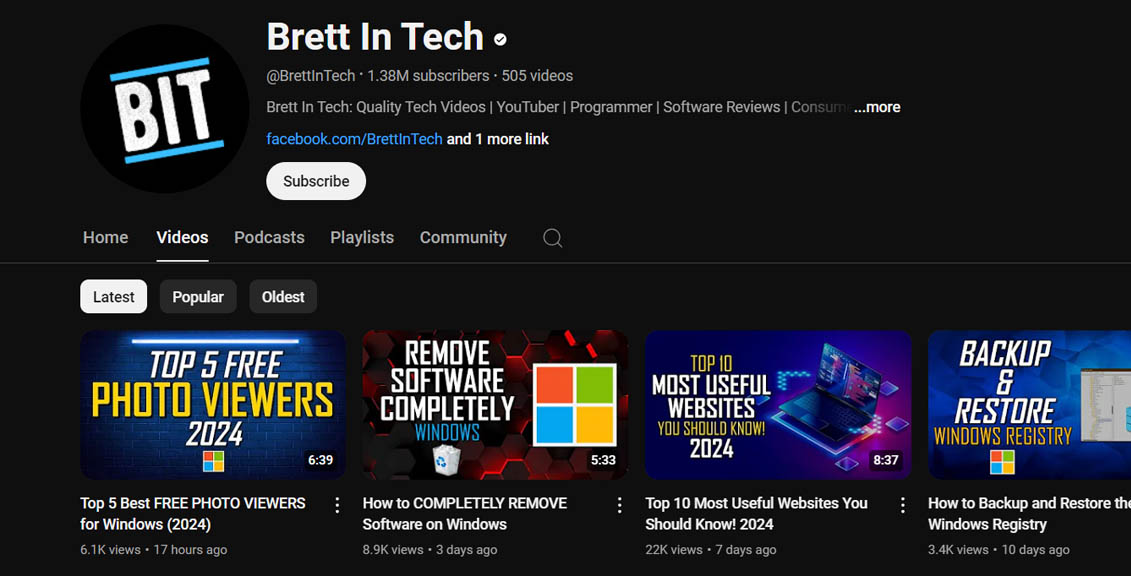
Tech / software: “best free screen recorder,” “how to use OBS for streaming,” “best laptop under $500,” “X vs Y which is better.” Good fit for faceless tech review channels with tutorials and comparisons.
Educational / history and science: “why did the Roman Empire fall,” “how does photosynthesis work,” “top 10 historical events,” “weird science facts.” Evergreen and search-friendly for faceless educational channels.
Motivational / self-improvement: “morning routine for success,” “5 habits of millionaires,” “best motivational quotes,” “how to stay motivated.” Align well with faceless motivational channels and list-style or quote formats.
Mix broad “pillar” topics with long-tail variations so you have a pipeline of ideas that match real searches and your production capacity.
Frequently Asked Questions (FAQs)
What is the best keyword research tool for faceless YouTube channels?
A combination works best: Ahrefs’ YouTube keyword tool for volume and competition, RyRob’s free YouTube keyword tool for competitor insights, and Google Trends for trend direction. Use YouTube search autocomplete and competitor “Popular” tabs to find real queries and proven topics. Free options (RyRob, Trends, autocomplete) are enough to start; Ahrefs adds depth when you’re ready to invest.
Do tags still matter for YouTube SEO in 2026?
Tags show a weak correlation with rankings in large studies; YouTube relies more on title, description, and video content. Still, using a small set of relevant tags (including your main keyword) is quick and may give a small edge. Focus more on title, description, watch time, and engagement than on tag stuffing.
How long should faceless YouTube video titles be?
There’s no strict character limit that’s proven optimal. Keep titles clear and put the main keyword near the start. Long enough to be descriptive, short enough to read at a glance in search and on mobile. Typically 50–70 characters is a common range; prioritize clarity and keyword placement over length.
Why do my faceless videos not rank even with good keywords?
Ranking depends on more than keywords. Watch time, CTR, and engagement (likes, comments, shares, subscriptions driven) strongly correlate with rankings. If your keyword targeting is solid but you’re not ranking, improve the hook and first 30 seconds, add retention spikes, use a stronger thumbnail, and encourage engagement. Small channels can rank when retention and CTR are strong.
Should I target high-volume or long-tail keywords for a new faceless channel?
Long-tail keywords usually have lower competition and are easier for new or small channels to rank for. Start with specific phrases (e.g. “how to start investing with $100” instead of “investing”) and build a list of 10–20 such terms. As you gain authority and watch time, you can gradually target broader, higher-volume terms.
Summary
SEO for faceless channels runs from keyword research to ranking. Use YouTube autocomplete, Ahrefs, RyRob, and Google Trends to find high-value, achievable keywords. Put the main keyword early in the title, write descriptions of 150+ words with natural keywords and real value (timestamps, takeaways), and use thumbnails that get clicks. Remember that watch time and engagement matter more than metadata: structure scripts for hooks and retention, add chapters, and encourage comments and subscribes. Target long-tail and niche-specific keywords that fit your niche and production style, and keep optimizing titles and thumbnails based on CTR and retention. With consistent keyword research and on-video optimization, your faceless channel can rank and grow from search and recommendations in 2026.