BLOG ARTICLE
Faceless Channel Sponsorships: How to Get Brand Deals 2026

Brands don't sponsor a face; they sponsor an audience and a fit. Faceless channels that deliver clear demographics, strong engagement, and content that aligns with a product can land sponsorships as reliably as personality-driven creators. According to Influencer Marketing Hub, creator sponsorships generate over $24 billion annually, yet 62% of creators feel underpaid. Knowing your worth and how to pitch and negotiate puts you in the minority that gets paid fairly.
This guide covers what sponsors pay faceless channels, how to find and pitch brands, simple pitch templates, negotiation tactics, and contract basics so you can add sponsorships to your monetization mix without showing your face.
TL;DR
- Faceless channels get sponsored because brands care about audience fit and content quality, not whether you show your face. Finance, tech, and education niches command premium rates.
- Rates vary by size and niche: In 2026, YouTube sponsorship CPM typically runs $15–$25; nano creators earn about $50–$300 per video, micro $300–$2,500, mid-tier $5,000–$10,000+. Finance and tech often earn several times more per view than gaming or entertainment.
- Outreach wins: Most brand deals come from you reaching out with a short pitch and a media kit. Lead with your audience, niche, and one or two proof points (views, engagement, past results).
- Negotiate with data: Quote a rate based on your average views and CPM for your niche. Direct deals usually pay 20–40% more than agency deals. Counter low offers once with a clear number; walking away is better than accepting unfair terms.
- Disclose clearly: FTC requires clear disclosure of sponsored content. State it in the video and in the description. Contracts should spell out payment, deliverables, and exclusivity before you film.
Why Brands Sponsor Faceless Channels
Sponsors care about reach, relevance, and brand safety. Faceless channels often deliver all three. The content is the product: tutorials, reviews, explainers, or entertainment. Brands in tech, finance, software, education, or productivity look for creators whose viewers are already interested in their category. A faceless tech channel with 50K subscribers and a clear audience profile can be more valuable than a lifestyle vlogger with 200K subscribers and a mixed demographic.
Niche alignment matters more than format. A finance brand wants viewers who think about money, not necessarily a famous host. Animated explainers, screen recordings, or AI voiceover content can perform as well as or better than talking-head videos for certain products. Brands also like predictability: faceless content tends to be evergreen, so a sponsored video can keep driving traffic and awareness for months.
You're not competing with face creators on "personality." You're competing on audience quality and fit. Document who watches your channel (age, country, interests), your average views per video, and engagement rate. That data is what brands use to decide whether to sponsor you.
What Sponsors Pay: Rates by Channel Size and Niche
Rates depend on views, engagement, niche, and audience geography. 2026 benchmarks put typical YouTube sponsorship CPM in the $15–$25 range, with wide variation by niche and creator tier.
By Subscriber and View Tier
- Nano (1K–10K subs): About $50–$300 per video, with CPM often $3–$8. Many brands offer product-only or small cash plus affiliate. Building a media kit and one or two case studies helps you move into real cash deals.
- Micro (10K–100K subs): $300–$2,500 per video, with some deals up to $5,000 in strong niches. Engagement around 1.8% or higher supports higher rates. This is where many faceless channels first land consistent sponsorship income.
- Mid-tier (100K–500K subs): $5,000–$10,000+ per video depending on niche and campaign. Brands often want multiple touchpoints (e.g. dedicated video plus Shorts or community post). Finance, tech, and wellness often sit at the top of this range.
- Macro (500K–1M subs) and mega (1M+): $10,000–$100,000+ per video, with annual brand income for top creators in the tens of millions. At this level, agencies and long-term partnerships are common.
These ranges are guidelines. Your actual rate depends on your average views per video (not just subscribers), engagement rate, and whether your audience is in high-value regions (e.g. US, UK, Canada, Australia). A channel with 80% US viewers can command meaningfully higher CPM than one with mostly international traffic.
How Niche Affects Your Rate
Niche selection has a large impact. Finance and credit-card content often command $20–$50 CPM; business, tech reviews, and "make money" content also sit at the high end. Gaming and broad entertainment often sit at $5–$15 CPM. So a finance channel with 100K views per video can earn several times more per sponsorship than a gaming channel with the same views. When you pitch, lead with your niche and, if you have it, data on audience demographics and past sponsor results.
Faceless channels that attract sponsors: real examples
Concrete examples help you see how niche, format, and scale translate into sponsor interest. These faceless channels operate in high-CPM or high-reach categories and are the kind of profiles brands look for when placing sponsored content.
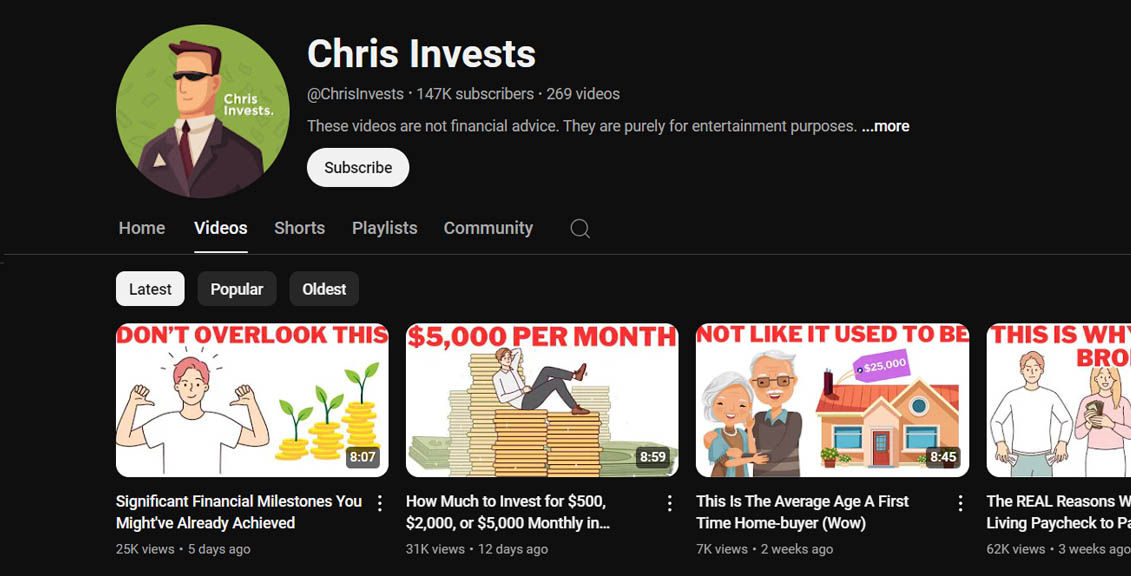
Chris Invest uses whiteboard animations to explain financial concepts. The finance niche commands premium CPMs, and channels like this attract budgeting apps, investment platforms, and financial courses. Estimated earnings from ads and sponsorships for similar-sized finance channels often sit in the $5,000–$6,000 per month range. When you pitch finance or business brands, having a clear audience (e.g. people interested in investing or side income) and consistent, evergreen content matters more than subscriber count alone.
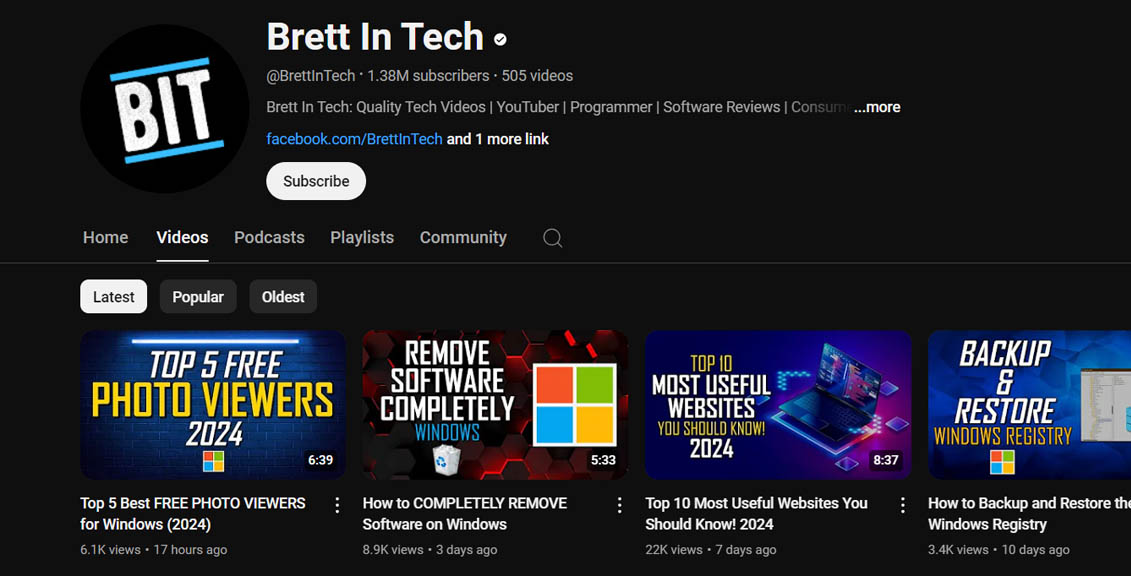
Brett in Tech delivers faceless tech tutorials and reviews. Tech attracts both ad dollars and direct sponsorships from software and hardware brands. Viewers searching for how-to content are often in a buying mindset, so sponsors pay for integrated segments, dedicated videos, or affiliate partnerships. If your channel covers software, tools, or gadgets, your media kit should highlight average views, audience geography, and any past sponsor or affiliate results.
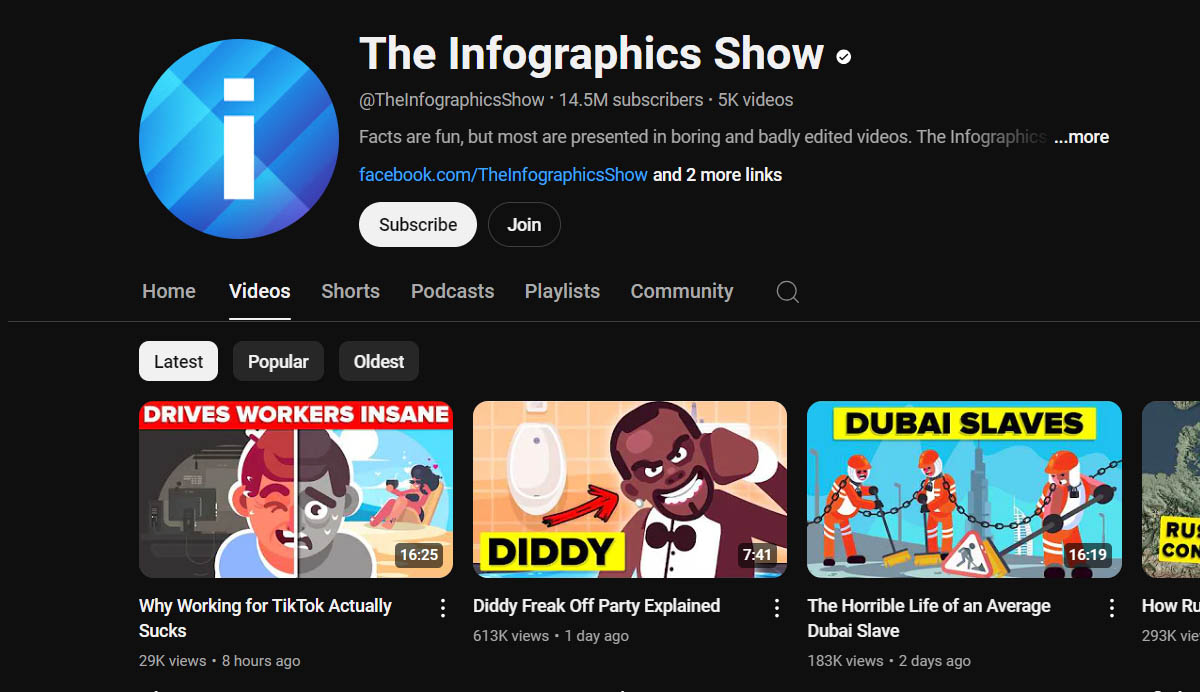
The Infographics Show uses animated explainers across education and entertainment topics and has grown to over 14 million subscribers. At that scale, sponsors pay an estimated $10,000–$15,000 per video for integrated placements. The format is fully faceless: voiceover plus visuals. It shows that sponsors care about reach and audience fit, not whether a creator appears on camera. Even at smaller scale, the same principle applies: clear niche, steady views, and professional presentation make you sponsor-ready.
How to Find Sponsorship Opportunities
Brands find creators in three main ways: they discover your content, you reach out to them, or you join a marketplace or agency. For most faceless creators, outreach is the fastest path.
Direct outreach: List brands your audience already uses. If you make tech tutorials, think software, hardware, and SaaS. If you make finance content, think budgeting apps, brokers, and courses. Find a contact (marketing, partnerships, or "creator" team) via LinkedIn or the brand's site and send a short pitch with your media kit or rate card. Start with 10–20 brands; follow up once after 5–7 days if you don't hear back.
Creator platforms: Networks like AspireIQ, Activate, or platform-specific programs (e.g. YouTube's own brand connect) match creators with campaigns. They're useful for discovery but often take a cut or offer lower rates than direct deals. Use them to build a portfolio, then use that portfolio to pitch brands directly for better terms.
Agencies: At 250K+ subscribers (or strong engagement at lower subs), agencies may approach you. They handle finding brands and negotiating but typically take 10–30% commission. Direct deals typically pay 20–40% more than agency deals because there's no middleman. Weigh the time you save against the commission; many creators do a mix of direct and agency deals.
Pitch Email Templates
Keep pitches short: who you are, who watches, one or two proof points, and what you're offering. Here are two templates you can adapt.
Cold outreach (brand you haven't worked with):
Subject: Sponsorship opportunity – [Your channel name] ([niche] audience, [X]K subs)
Hi [Name],
I run [Channel name], a [niche] YouTube channel with [X]K subscribers. Our audience is mostly [brief demographic, e.g. 25–45, US/UK, interested in productivity and tools].
We average [X]K views per video and have worked with [past sponsor or "brands in [niche]"]. I'd love to explore a sponsored integration that fits our content—[e.g. a dedicated segment, full video, or series].
I've attached a short media kit with audience and rate details. Happy to jump on a call if that's easier.
Best,
[Your name]
Reply when a brand asks for your rates:
Thanks for your interest. My standard rate for a [e.g. 60–90 second integrated segment] in a long-form video is $[X] for [e.g. 30 days of exclusivity in-category]. That's based on our average [X]K views per video and [niche] CPM benchmarks.
I can also offer [e.g. a pinned comment, description link, or Shorts mention] for an additional $[Y]. If you're planning multiple videos or a longer campaign, I'm open to a discounted package.
Happy to discuss deliverables and timeline.
[Your name]
Customize every pitch. Mention a specific product or campaign if you can; it shows you've done your homework and increases the chance of a reply.
Negotiating Rates and Terms
Know your floor. Before you negotiate, decide the minimum you'll accept. Use your average views and a CPM range for your niche (e.g. $10–$25). (Average views ÷ 1,000) × CPM = rough minimum. Don't go below that number unless the deal has other value (long-term relationship, product you believe in, or strong affiliate upside).
Counter once with a number. If a brand lowballs you, reply with something like: "Thanks for the offer. My rate for this type of integration is typically $[X], based on our audience size and engagement. Can you meet that?" Many brands expect a counter; you look professional when you have a clear ask. If they say no, you can walk away or accept knowing you tried.
Prefer flat fees over pure performance. Flat payment per video is safer. Performance bonuses (e.g. extra payment if the video hits X views or drives Y signups) are fine if the base fee is acceptable. Pure commission-only deals are risky for you; avoid them unless there's a strong guaranteed minimum.
Direct vs agency. If you work with an agency, ask about their commission and what you'd get for the same deal direct. Direct negotiations often yield 20–40% more. Use agencies for volume or access to big brands; use direct outreach for better rates and relationships.
What to Put in a Contract
Get the main terms in writing before you film. A simple agreement or email confirmation can cover:
- Payment: Total amount, currency, and when you get paid (e.g. on upload, on approval, net 30).
- Deliverables: What you're making (e.g. one 8–12 min video with a 60–90 second sponsor segment), where the link goes, and any required phrases or disclaimers.
- Exclusivity: Category and duration (e.g. no other VPN sponsors for 90 days). Shorter exclusivity usually means you can charge more for the next deal sooner.
- Revisions: How many rounds of changes the brand gets and what happens if they ask for more.
- Usage rights: Whether they can repost your video on their channels or use clips in ads. If they want extra usage, that can justify a higher fee.
You don't need a lawyer for every deal, but for payments over a few thousand dollars or long exclusivity, a quick review is wise. FTC endorsement rules require clear disclosure of sponsored content; your contract can require that the brand doesn't ask you to hide the sponsorship. State in the video and in the description that the video is sponsored; that keeps you compliant and builds trust with viewers.
Disclosure and Trust
Sponsorships must be disclosed. The FTC expects that viewers see a clear disclosure before they engage with the content. Saying "This video is sponsored by [Brand]" at the start of the integration and adding a line in the first few lines of the description (e.g. "This video is sponsored by [Brand]. All opinions are my own.") is usually enough. Don't bury the disclosure below "Show more" or in vague language. Transparency protects you and keeps your audience's trust, which matters for affiliate marketing and future sponsorships too.
Combining Sponsorships With Other Monetization
Sponsorships work best as one part of a diversified revenue strategy. Ad revenue, affiliate links, digital products, and sponsorships together smooth out swings in any single source. Many faceless creators do one or two sponsored videos per month alongside regular content so the channel doesn't feel overloaded with ads. Keep the same content quality and format that grew your channel; sponsors pay for access to that audience, not for a different kind of content.
Frequently Asked Questions
Do faceless channels get sponsored?
Yes. Brands care about audience fit, views, and engagement more than whether you show your face. Finance, tech, education, and productivity niches are especially attractive to sponsors. A clear niche and a media kit with audience and performance data make it easier to land deals.
How much do sponsors pay faceless YouTube channels?
Rates vary by size and niche. In 2026, typical CPM is around $15–$25. Nano creators often see $50–$300 per video; micro $300–$2,500; mid-tier $5,000–$10,000+. Finance and tech usually pay more per view than gaming or entertainment. Your rate should reflect your average views per video and your audience's value to advertisers.
How do I get my first sponsorship?
Reach out to brands that fit your niche with a short pitch and a one-page media kit (subscribers, average views, audience demographics, engagement). Mention one or two proof points (e.g. a strong video, past collaboration, or audience feedback). Follow up once if you don't hear back. Your first deal might be under your target rate; use it to get a testimonial or case study for the next pitch.
Should I work with an agency or pitch brands myself?
Direct deals usually pay 20–40% more because there's no commission. Pitching brands yourself is often best when you're under roughly 250K subscribers and have time to send 10–20 targeted emails. Agencies help with volume and access to larger campaigns; use them when the time you save is worth the commission.
Do I have to disclose sponsorships?
Yes. The FTC requires clear and conspicuous disclosure of sponsored content. Say it in the video (e.g. at the start of the sponsor segment) and in the description. Don't hide it or use vague language. Disclosure keeps you compliant and maintains viewer trust.
Summary
Faceless channels can land brand deals by focusing on audience fit, niche, and clear metrics. Know your worth using CPM ranges for your niche and channel size, then reach out to relevant brands with a short pitch and media kit. Use the pitch templates as a starting point and negotiate with a clear minimum and one counter. Get payment, deliverables, and exclusivity in writing, and disclose sponsorships clearly in the video and description. Combined with ads and affiliate income, sponsorships can become a stable part of your faceless channel income without ever showing your face.